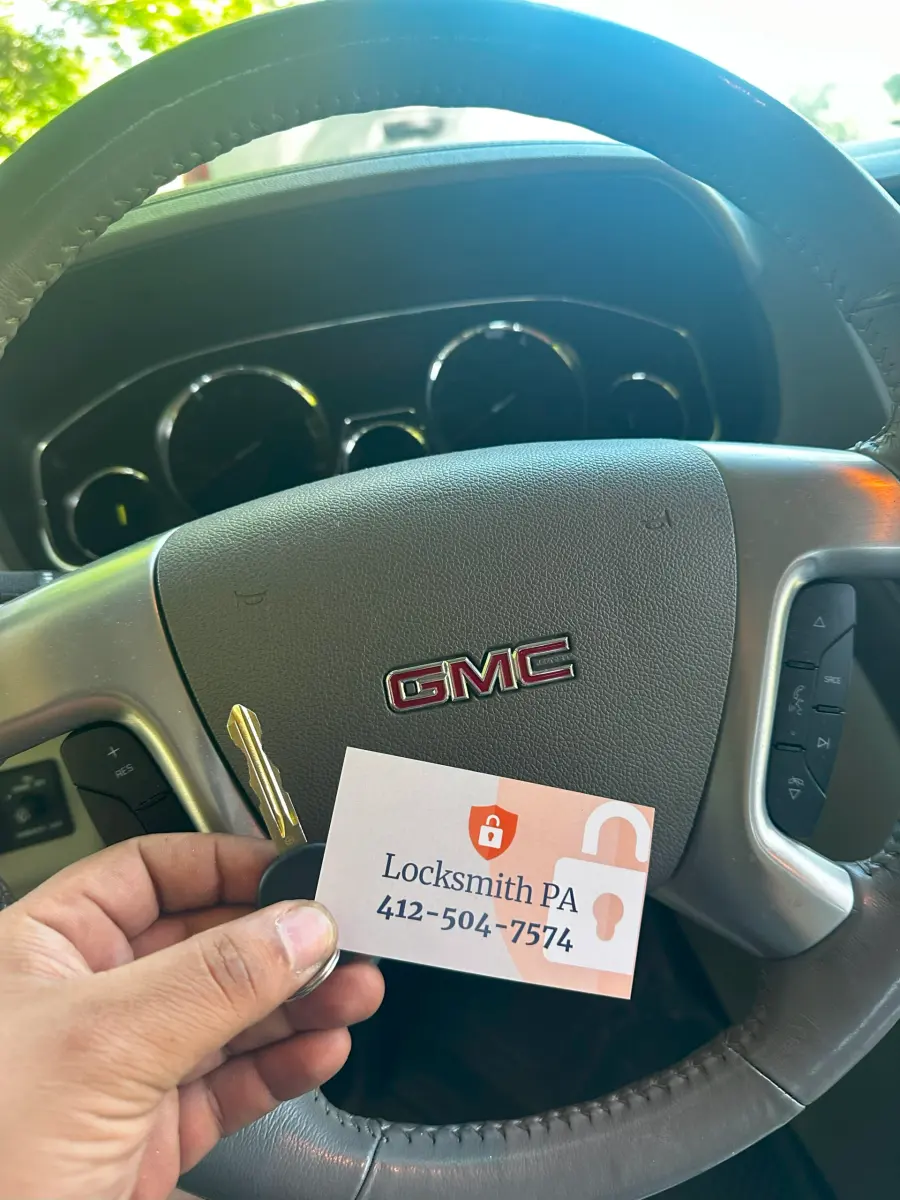
Locked Out of Your Car? What to Do, Step by Step
- Registered contractorPA192675
- Insured$1,000,000
- 12 months warrantyOn our work
- 24/7Mobile service
- 5.0 on Google25 reviews
If you are locked out of your car, the first job is to make sure nobody is in danger, and the second is to get the door open without damaging it. Most lockouts are solved in minutes by the right person with the right tools. This guide walks through what to check yourself, when to stop trying, and what happens when a car lockout locksmith arrives, so you can decide calmly even when you are standing in the cold.
Locksmith PA works as a mobile service at any hour. Nothing here replaces that call; it is meant to help you make the right one quickly and to spare your door, your paint and your evening.
What Should I Do First When I Am Locked Out of My Car?
Check for danger first. If a child or an animal is shut inside, or the engine is running in a closed garage, call 911 now. If everyone is safe, move to a well-lit spot, try every door and the trunk, then choose between a spare key, roadside cover and a mobile locksmith.
Look at the whole car in daylight if you can. Open windows, a loose trunk release and an unlocked rear door are the easy wins, and they take under a minute to check. Do not break glass: a new window costs more than any lockout call and leaves the car open to weather and theft.
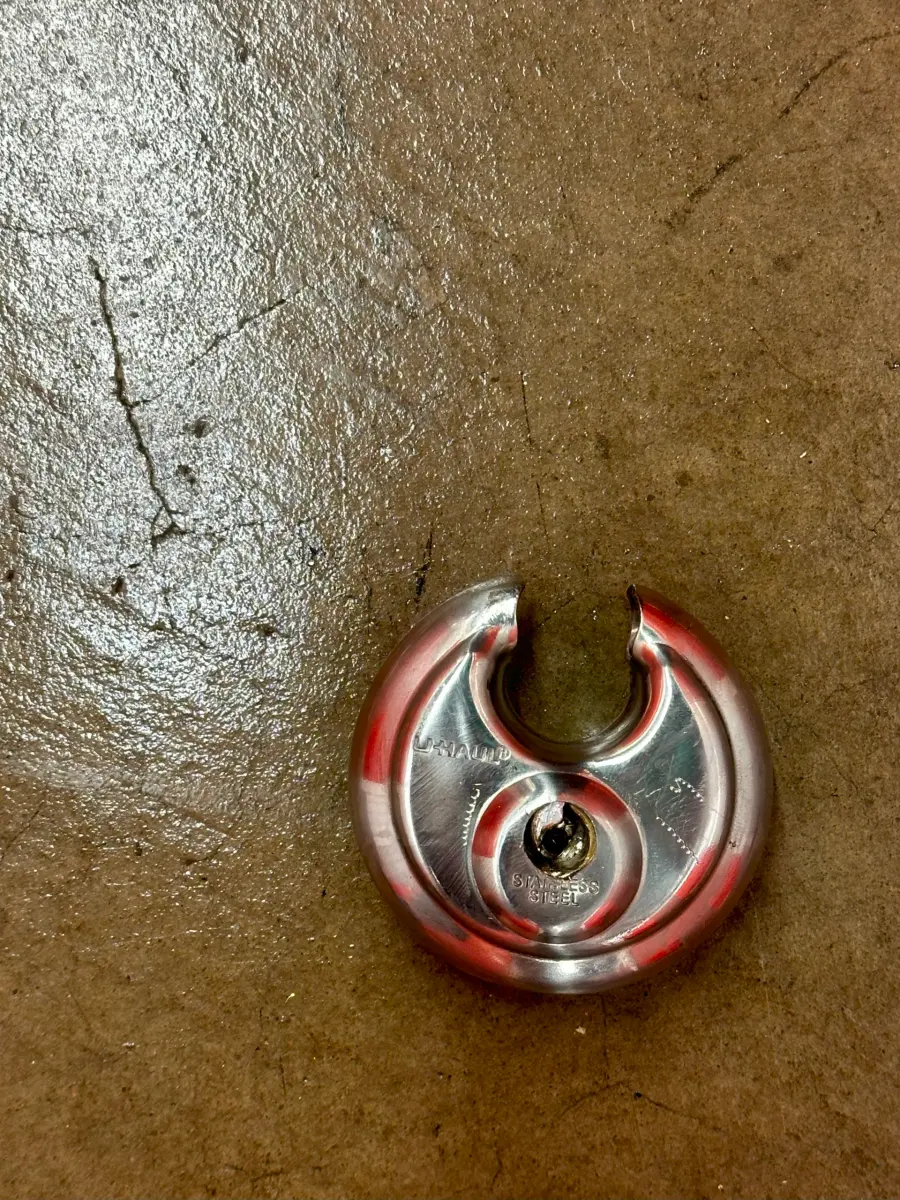
Seven Emergency Steps if You Are Locked Out of Your Car
The steps below run from the quickest check to the most involved fix. Stop as soon as one of them works, and jump straight to the last step when the situation is urgent or the weather is bad, because waiting never makes a lockout easier.
- Make sure everyone is safe. If a child, pet or running engine is involved, call 911 first.
- Move away from traffic and keep your phone charged and in your hand.
- Try every door handle and the trunk release, including the rear doors.
- Ask whether anyone has a spare key and can bring it, and check any hide-a-key you may have set up.
- See whether your insurer or roadside plan covers a lockout, because many plans include it.
- Do not use a coat hanger, a wedge or a strip of plastic on the door; it can bend the frame, tear the weatherstrip or cut wiring.
- Call a mobile locksmith, give the address and the make, model and year, and wait somewhere safe.
Why You Should Not Force the Door
A car door is not just a panel with a latch. Inside it sit the lock rods, the window motor, the wiring for mirrors and speakers, and on many cars the sensors for a side airbag. A hanger pushed down past the glass can snag any of those. The repair for a bent door seal or a cut wire easily outweighs a lockout call.
Pulling the door open with a wedge has a different risk: it can crease the skin of the door or chip the paint at the edge. Trained locksmiths use thin air wedges and long reach tools that spread the gap gently, and they keep a hand on the weatherstrip so it seats again afterwards.
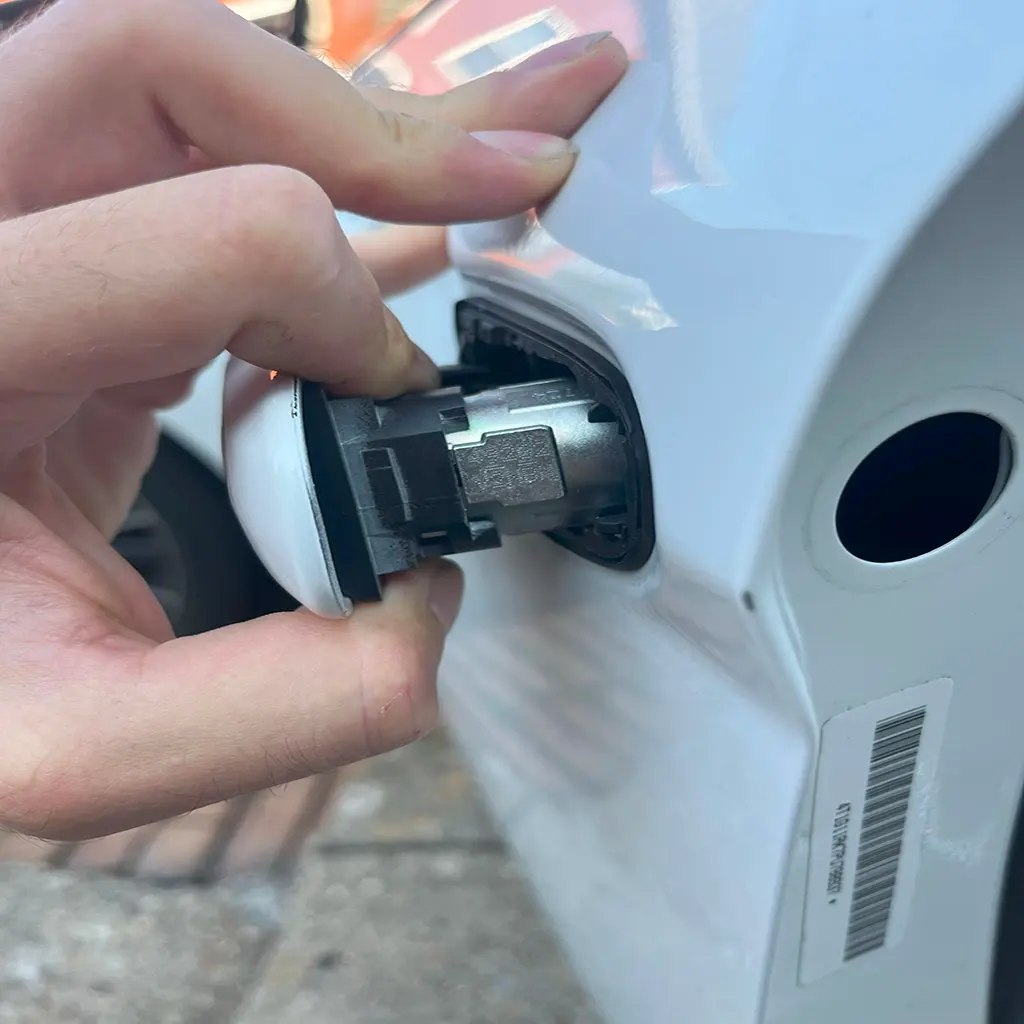
What a Locksmith Does at the Car
A reputable technician first checks that the car is yours and then picks the least invasive method for your model. For many cars that means a thin wedge, a long reach tool and a press on the unlock button or the handle from inside. The aim is a door that opens with no mark on it.
Once the door is open, the technician can deal with what caused the problem. Keys locked in car are often the last working copy, so a spare can be cut on the spot, a fob can be paired to the car, and a worn key can be replaced before it fails again.
The Key Is Not Just Metal
Opening the door is a different job from starting the car. The federal vehicle standard, 49 CFR 571.114, counts a key as either an object or an electronic code, so long as it lets the operator start the engine. A modern key therefore carries a code as well as a blade, and a replacement has to carry the right code before the engine will run.
The same standard says that with the key removed, the starting system must prevent normal engine activation. That is why a key left inside a locked car is a lockout call, while a key lost somewhere on the road is a car key replacement call, and a dead remote is a matter for key fob programming.
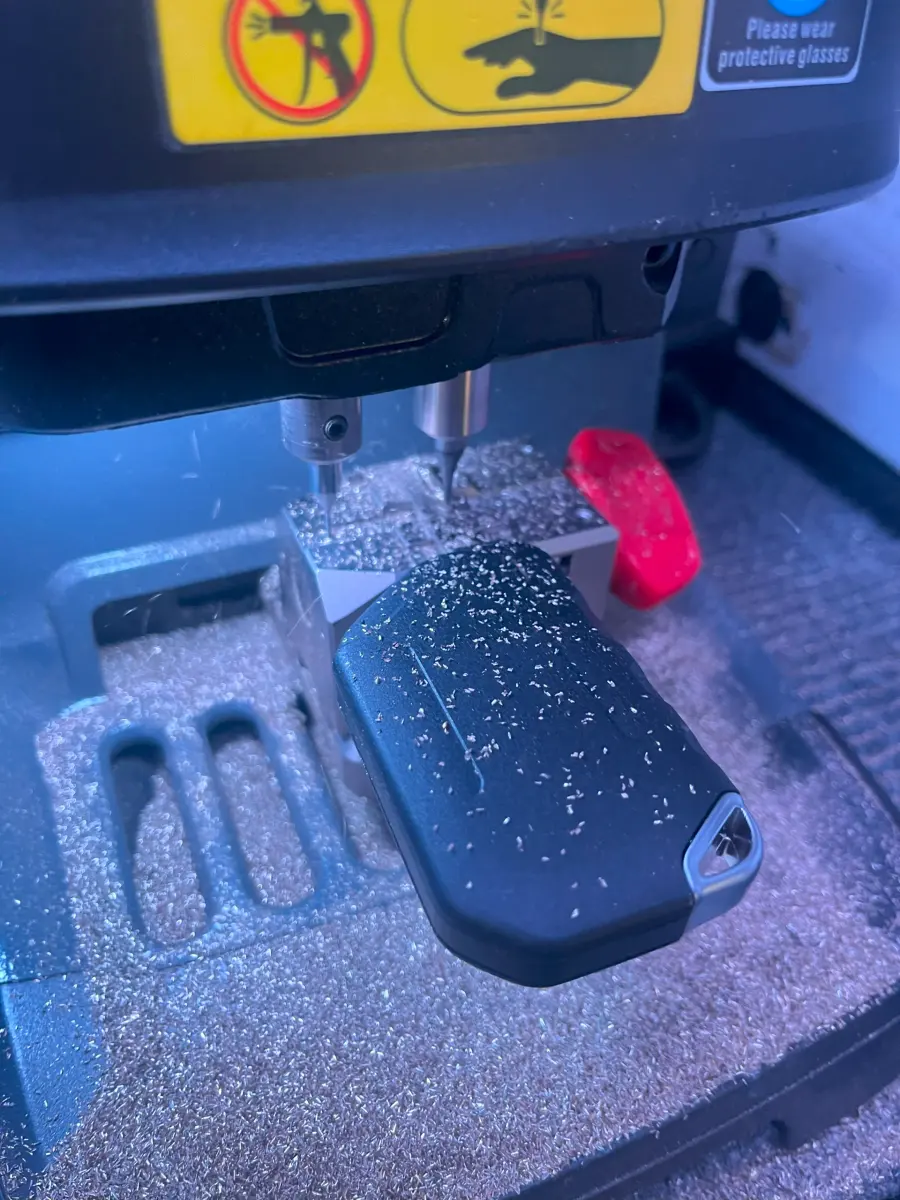
If the Key Is Lost, Not Locked Inside
When the key is gone, opening the door only solves half the problem. Without a working key or fob the car will not start, so tell the call-taker that the key is missing. The technician then brings the blank, the cutting machine and the programming tool for your model, and does the work beside the car.
Be ready with the vehicle identification number or the registration, and a photo ID that matches. A technician needs to know the car is yours, and that is a good sign in itself: a locksmith who does not ask is a locksmith to be careful with.
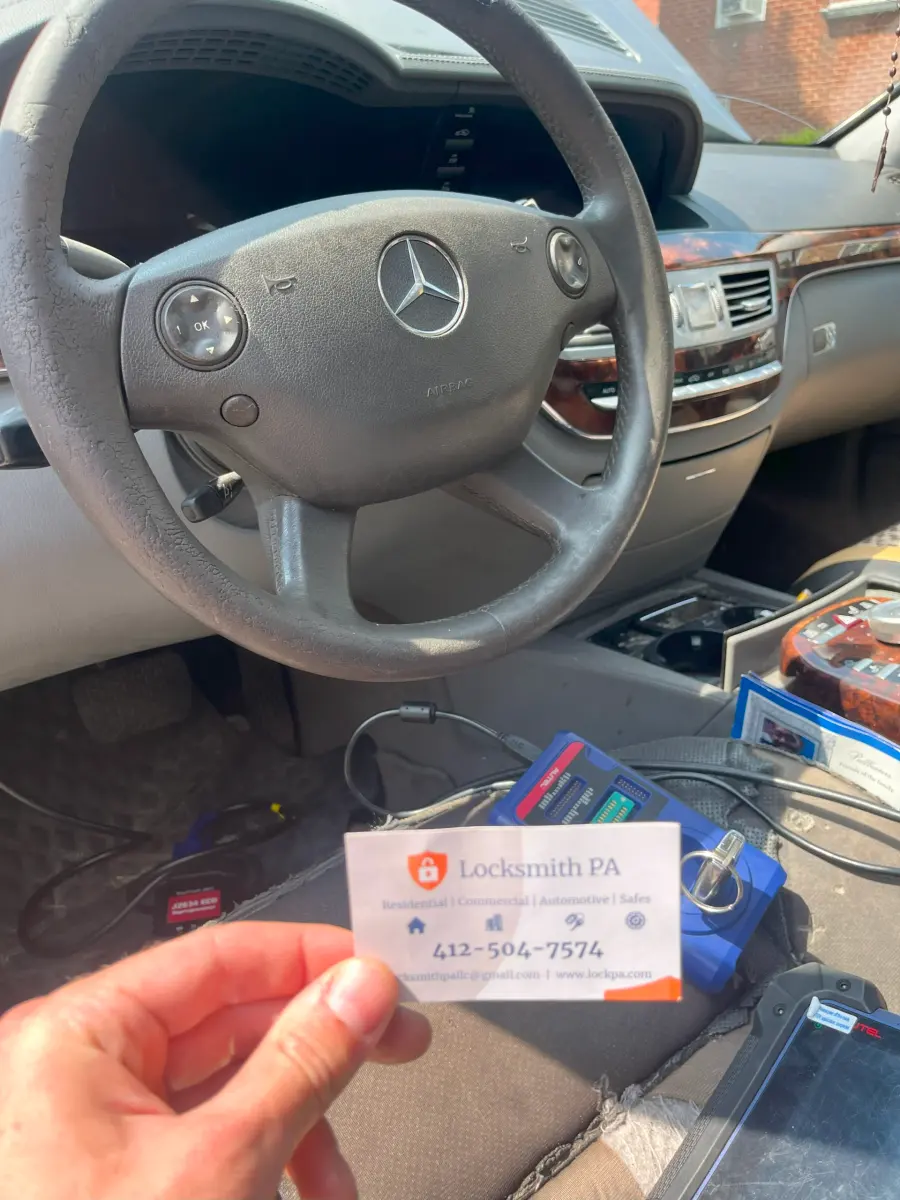
Keeping It from Happening Again
Most lockouts follow the same pattern: a key set down on a seat, a fob dropped into a bag, a door shut with the engine still running. A habit helps more than a gadget. Pat your pocket for the key before you close the door, and keep a spare in a wallet or with someone you trust, not under the bumper.
A spare is easier to make while you still have the working key, because the technician can copy it instead of generating a new one. Ask about a spare the next time a locksmith is at the car, and check the battery in your fob once a year.
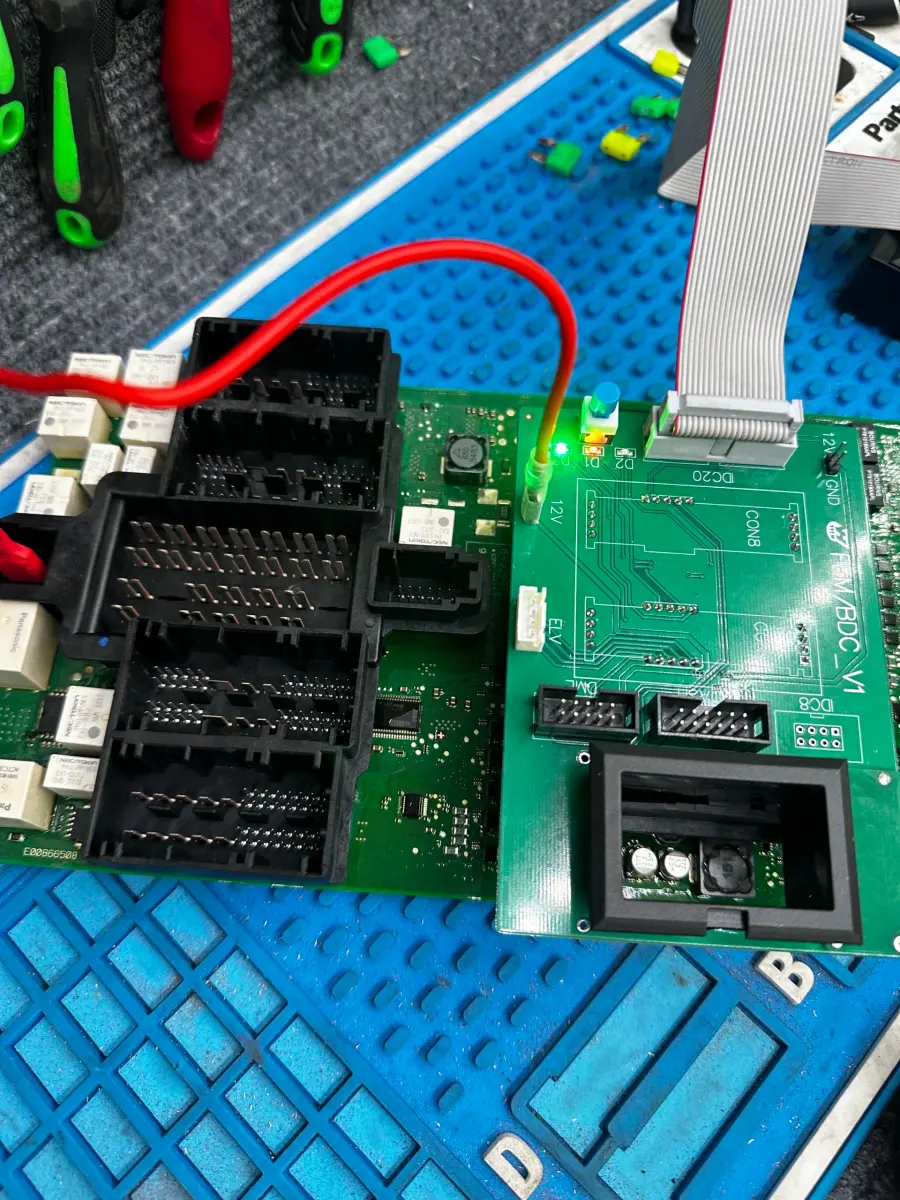
When to Call Locksmith PA
Call (412) 504-7574 at any hour. Tell the call-taker where you are, which car it is and whether the key is inside or lost, and a technician is sent to you. The same line takes house and business calls, and the emergency locksmith page explains how night-time calls are handled.
Frequently Asked Questions
Can a locksmith open any car?
Most cars can be opened without damage, but the method depends on the make, model and year. Tell the call-taker which car it is and whether it has side airbags or a keyless entry system, so the technician arrives with the right tools.
Will opening the door scratch the paint?
It should not. A locksmith uses thin air wedges and long reach tools that spread the door gap gently, and keeps the weatherstrip protected. Forcing a door with a hanger or a screwdriver is what scratches paint and bends frames.
Is a lockout call the same as getting a new key?
No. A lockout opens the door. A new key is a separate job that cuts the blade and, for most modern cars, programs a chip or a fob so the car recognizes it.
Source: 49 CFR 571.114