Door Hardware Repair Pittsburgh PA for Businesses
- Registered contractorPA192675
- Insured$1,000,000
- 12 months warrantyOn our work
- 24/7Mobile service
- 5.0 on Google25 reviews
Door hardware repair Pittsburgh PA businesses need usually starts with a door that will not latch, a lever that droops or a push bar that sticks. A mobile technician from our commercial locksmith team repairs the lock, latch, cylinder or exit device on site, so the door secures at closing time and opens freely for anyone leaving.
What Counts as Door Hardware?
Everything on the door that locks, latches or opens it: lever and knob sets, mortise and cylindrical locks, cylinders, strike plates, push bars and other exit devices, and the pulls on storefront doors. A fault in any one of these parts can stop the whole door from closing, locking or releasing as it should.
Commercial Lock Repair for Heavy Use
Business doors open far more often than house doors, so wear arrives sooner. Commercial lock repair covers worn latch bolts, broken springs inside lever sets, cylinders that bind and screws that work loose under constant traffic. Many of these parts can be replaced one at a time, which keeps the lock, and the keys your staff carry, in service.
Hardware grades help explain the wear. Under ANSI/BHMA A156.3, exit devices are cycle-tested to 500,000 cycles at Grade 1, 250,000 at Grade 2 and 100,000 at Grade 3. A light device on a busy entrance reaches its limit years before a heavy one, which is worth knowing when choosing between a repair and a replacement.
Lever Handle Repair
A drooping lever is one of the most common commercial faults. The spring that returns the lever to level has weakened or snapped, so the lever hangs down, often with a latch that no longer pulls back fully. Lever handle repair replaces the return spring or the lever housing, and the technician then checks that the latch springs out again.
Lever sets on busy doors also loosen at the mounting, so the whole handle rocks when it is pulled. Tightening the through-bolts and checking the spindle stops the movement before it cracks the housing. Where a lever has been forced or kicked, the technician checks the latch and strike as well, since the damage rarely stops at the handle.
Push Bar Repair and Exit Devices
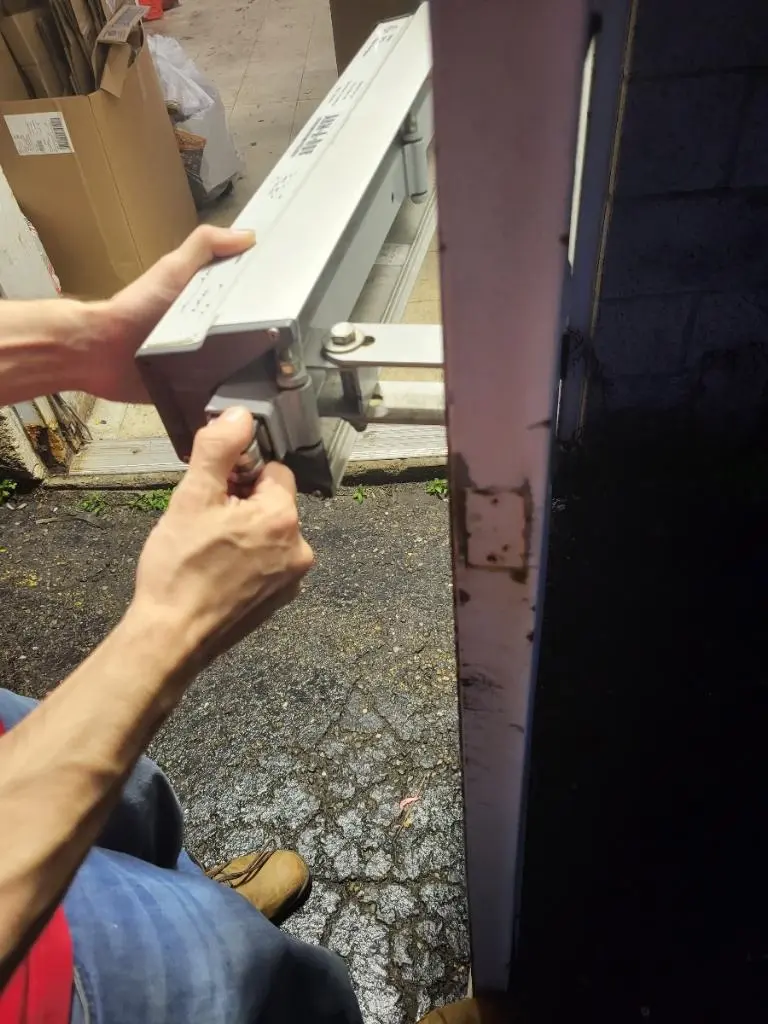
Push bar repair matters more than most work on a building, because an exit device sits on the route out. A bar that sticks, a latch that fails to release, or a dogging feature that will not hold the bar in all need prompt attention. The technician repairs or adjusts the device and tests that it releases with a single push.
Under the 2021 International Building Code, panic hardware needs a UL 305 listing, a releasing part across at least half the leaf, and an unlatching force of 15 pounds (67 N) or less. Which edition applies is for your local code official. If the device works but old keys must stop working, see exit device rekey.
Storefront Lock Repair
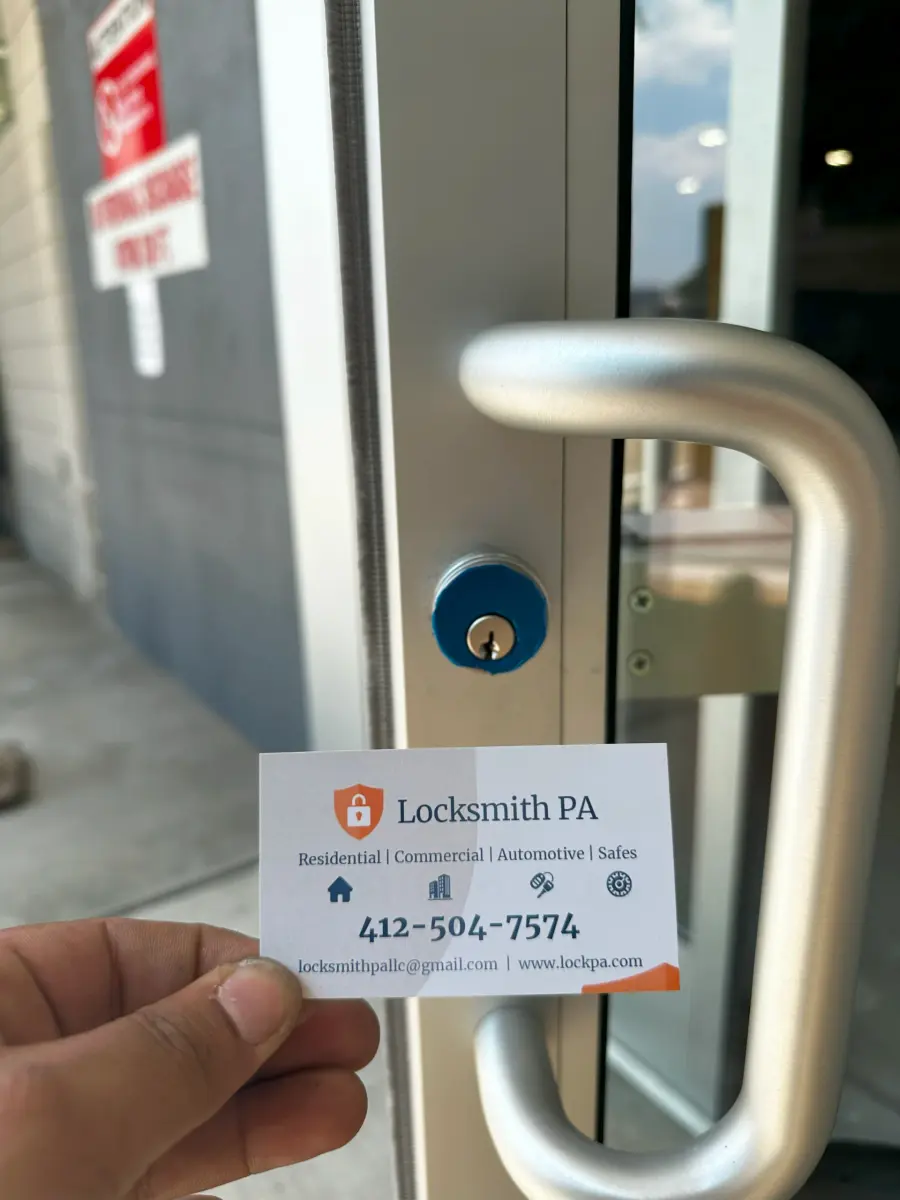
Aluminum and glass storefront doors use narrow locks, slim cylinders and long hinges or pivots that drift out of line over time. Storefront lock repair often means realigning the lock with its strike, replacing a worn cylinder, or fixing a bolt that no longer reaches the frame, so the shop can be secured properly at night.
If the door sags or scrapes the floor, the lock may be fine and the door itself out of adjustment. The technician will tell you what they find. Adjusting a lock to suit a sagging door only hides the fault, and it returns the next time the weather turns or the door is slammed.
Cylinders, Cores and Keys
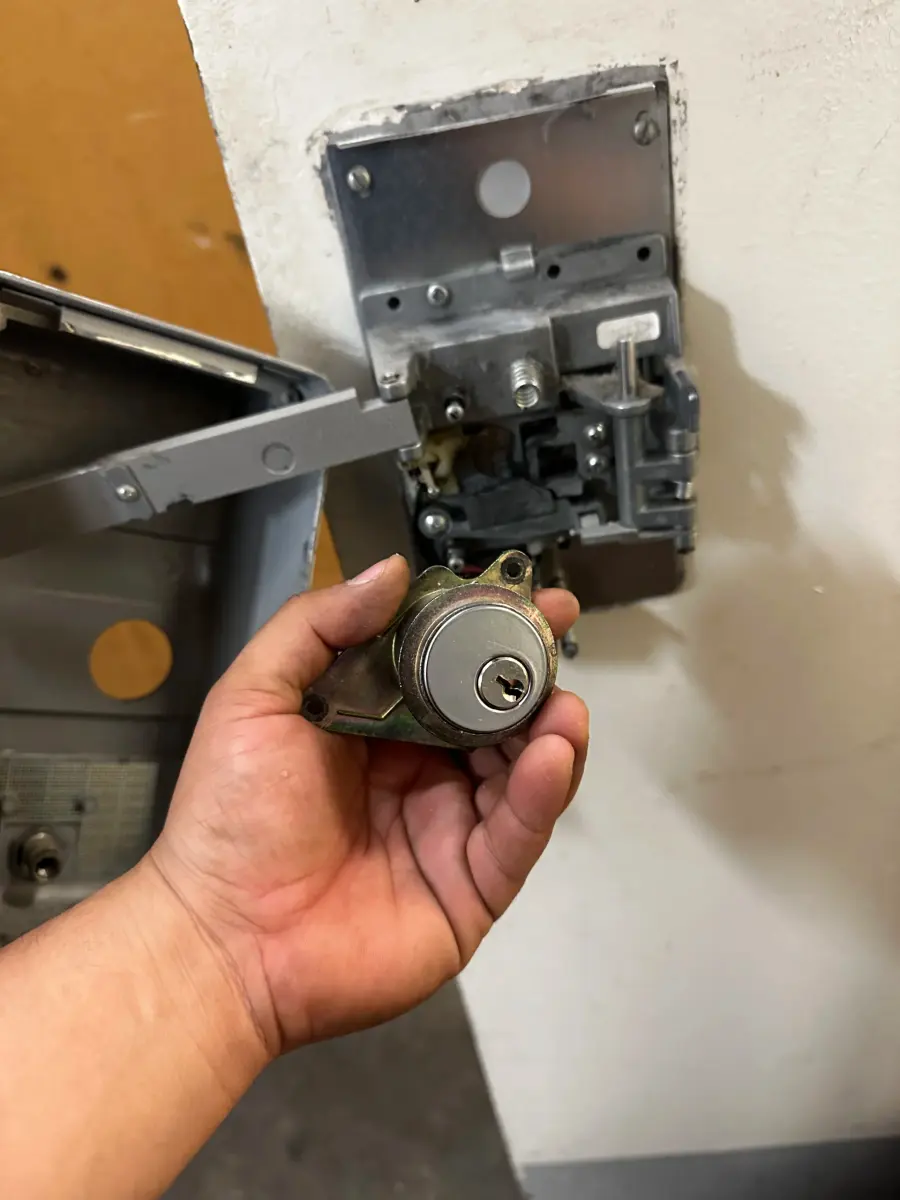
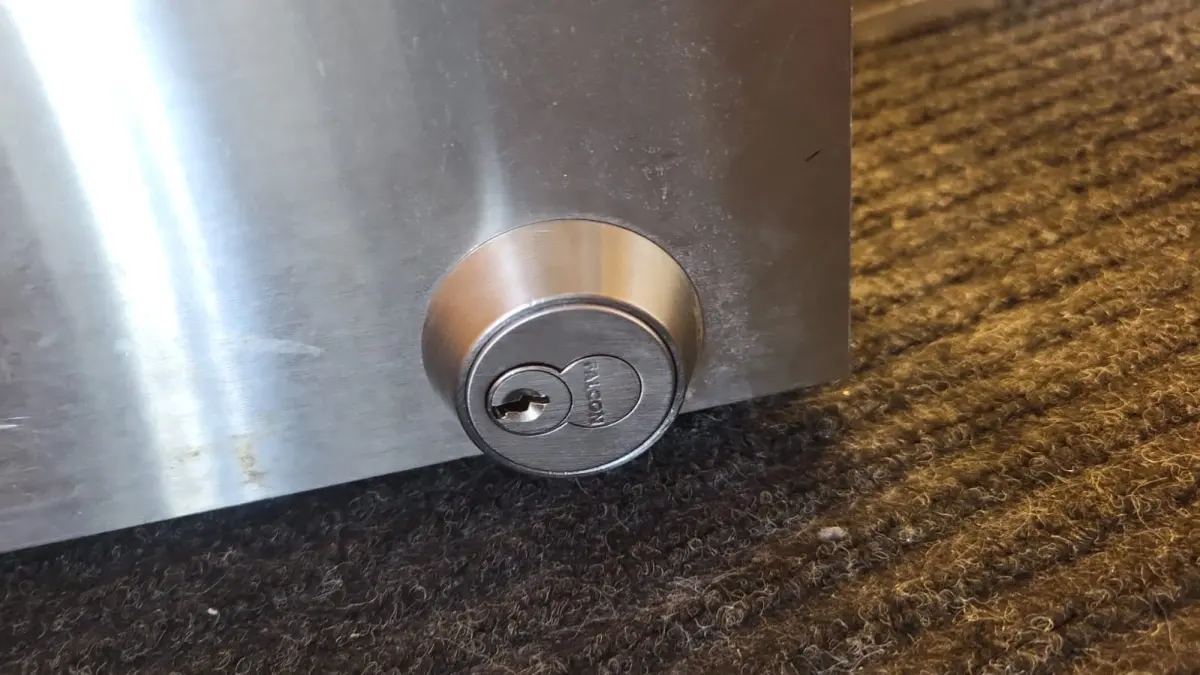
A cylinder that binds, or a key that has to be forced, wears both the key and the pins. On a business door used by many staff, that wear spreads across every copy of the key. Cleaning and re-pinning the cylinder, or replacing it, restores a smooth turn and stops people leaning on the key to open the door.
Some buildings use interchangeable cores, which slide out with a control key so a lock can be changed in minutes. If your locks have them, say so when you call, so the technician knows what to expect and can tell you in advance what can be done on site and what has to be ordered.
Strikes, Frames and Doors That Have Moved
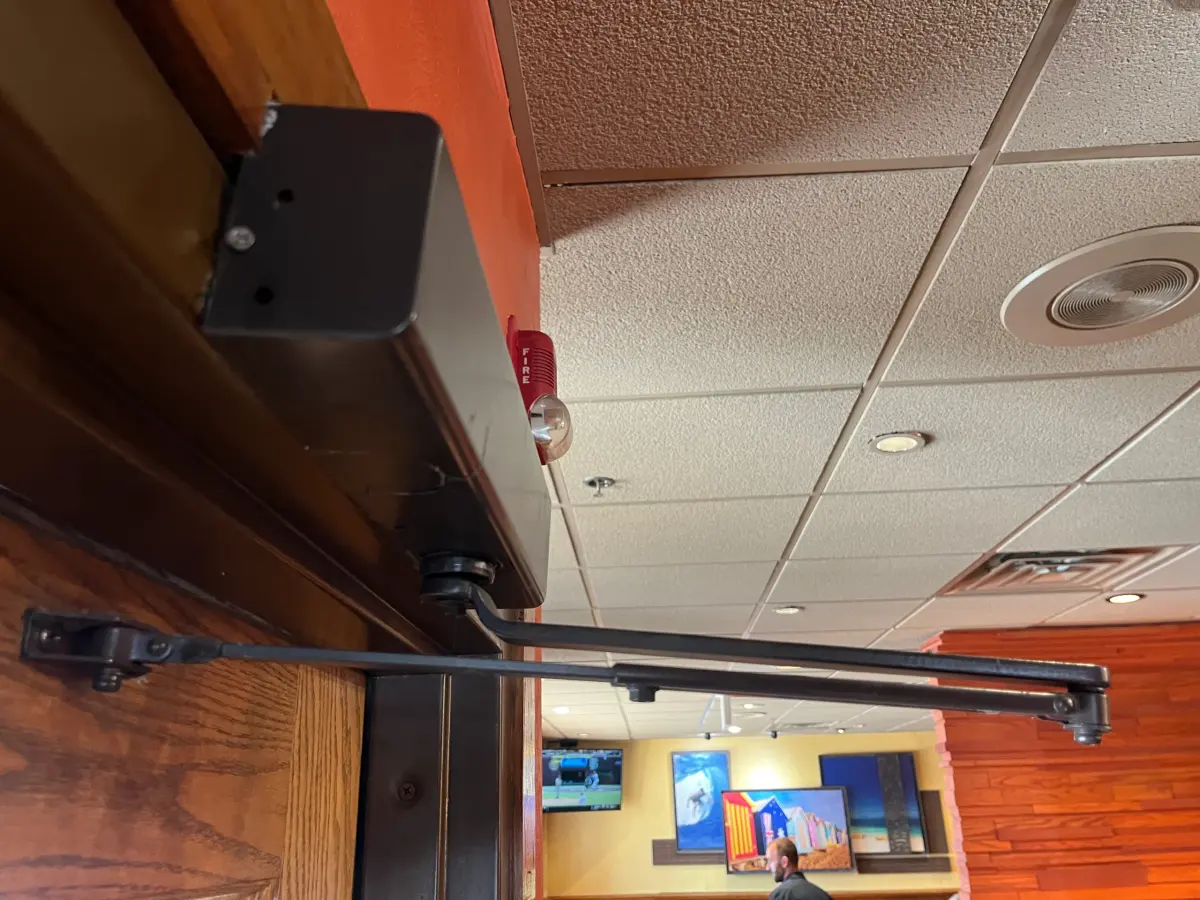
Many latch faults start at the frame. A strike plate that has worked loose, or a frame that has shifted, leaves the latch hitting metal instead of dropping into its hole. The technician tightens or repositions the strike, adjusts or replaces it where needed, and checks that the latch catches when the door swings shut gently as well as firmly.
Keeping Hardware Working Longer
A few habits keep hardware working longer. Report a sticking lock early, before staff start forcing it. Avoid propping exit doors open with wedges, which bend latches and strikes. Keep a short log of doors that give trouble, so the technician can see a pattern on the next visit and fix the cause rather than the symptom.
Door Hardware Repair Pittsburgh PA Visits
Tell us the address, which door, and what it does wrong: will not latch, will not lock, sticks, or will not open from inside. A technician arrives with common parts, checks the whole door, and repairs it on site where the part is in stock. Doors on an exit route are tested to confirm they still release freely.
Repair, Rekey or Replace
Repair fixes how the hardware works. Rekeying changes which keys work, and suits lost keys or staff changes; see commercial lock rekey for that. Replacement fits new hardware when parts are unavailable, the housing is broken, or the grade is too light for the traffic. One visit often combines two of these.
Failures Outside Business Hours
A door that will not lock at closing time cannot wait until morning. Call at any hour and our 24/7 emergency locksmith service sends a technician to secure the door that night, with the full repair finished then or on a return visit if a special part has to be ordered.
Book a Repair
Call (412) 504-7574 or send a request with the address and the door that needs work. Repairs come with our 12-month warranty, backed by $1,000,000 of insurance and contractor registration PA192675. Property managers can list several doors in one request, and the visit is planned around opening hours.
Frequently Asked Questions
Why will my commercial door not latch?
Common causes are a latch bolt that is worn or out of line with the strike, a weak return spring in the lever, or a door that has dropped on its hinges. The technician checks each in turn.
Can a push bar be repaired, or does it need replacing?
Many push bars can be repaired with new springs, latches or rods. If the device is cracked, no longer made or too light for the door, a replacement is the safer choice.
Can you repair hardware on a glass storefront door?
Yes. Narrow locks, cylinders and strikes on aluminum and glass doors are part of the work. If the door itself has sagged on its hinges or pivots, the technician will explain what needs adjusting.
Do you repair hardware outside business hours?
Yes. The phone is answered at any hour, and an urgent fault such as a door that will not lock can be made secure the same night.
Source: 2021 International Building Code, Chapter 10: Means of Egress (ICC), ANSI/BHMA hardware grades (Allegion)